ISSN 2097-6054(网络) ISSN 1672-9234(印刷) CN 11-5289/R
主管:中国科学技术协会 主办:中华护理学会
出版:中华护理杂志社
收录:中国科学引文数据库(CSCD)来源期刊
   中国期刊全文数据库
   中国核心期刊(遴选)数据库
   Scopus

中华护理教育 ›› 2026, Vol. 23 ›› Issue (3): 261-267.doi: 10.3761/j.issn.1672-9234.2026.03.001

• 模拟教学专题 •    下一篇

基于动机模型的沙盘模拟在本科急危重症护理学课程中的应用研究

覃慧1(), 张岩2,*()   

  1. 1.荆楚理工学院医学部 湖北省荆门市 448000
    2.荆门市人民医院急诊科 湖北省荆门市 448000
  • 收稿日期:2025-11-16 出版日期:2026-03-15 发布日期:2026-03-17
  • 通讯作者: *张岩,E-mail: 270685638@qq.com
  • 作者简介:覃慧:女,硕士,讲师,E-mail:1040788652@qq.com
  • 基金资助:
    湖北省教育厅指导性项目(B2024212)

Application of sand table simulation based on the motivation model in the undergraduate course of Emergency and Critical Care Nursing

QIN Hui1(), ZHANG Yan2,*()   

  1. 1. Medicine Department,Jingchu University of Technology,Jingmen 448000,Hubei Province,China
    2. Department of Emergency,Jingmen People’s Hospital,Jingmen 448000,Hubei Province,China
  • Received:2025-11-16 Online:2026-03-15 Published:2026-03-17
  • Contact: *ZHANG Yan,E-mail:270685638@qq.com
  • Supported by:
    Guidance Project of the Department of Education of Hubei Province(B2024212)

摘要:

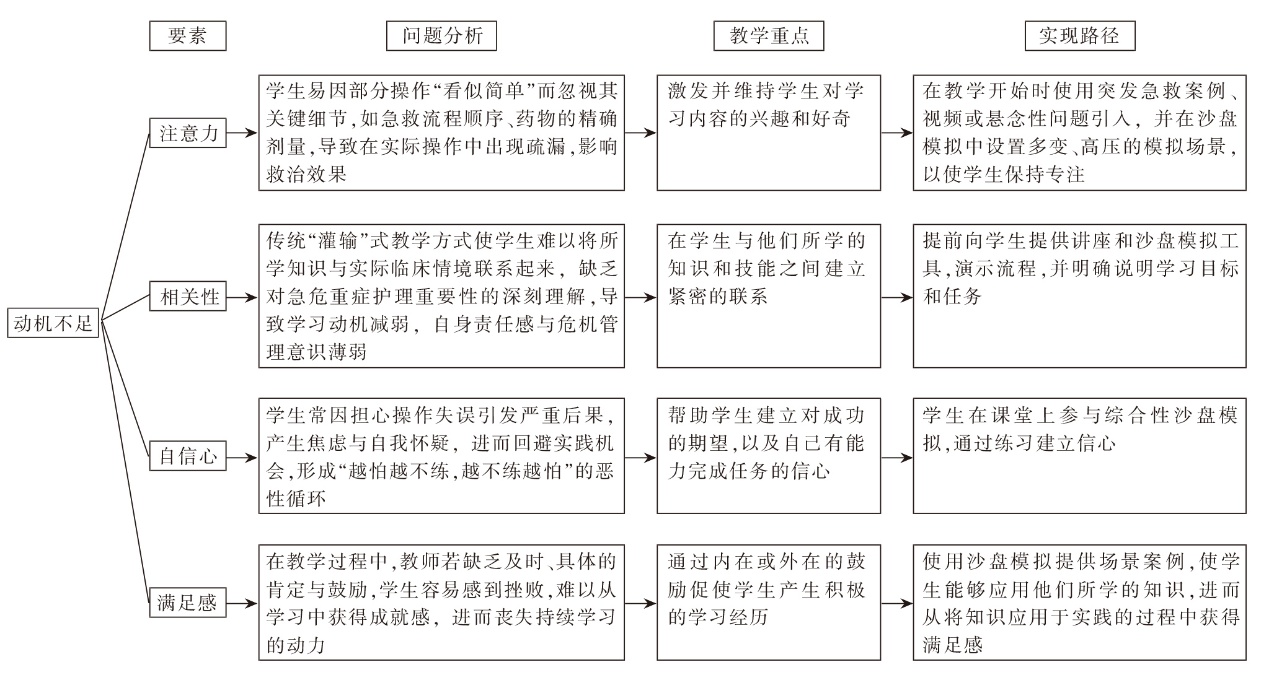
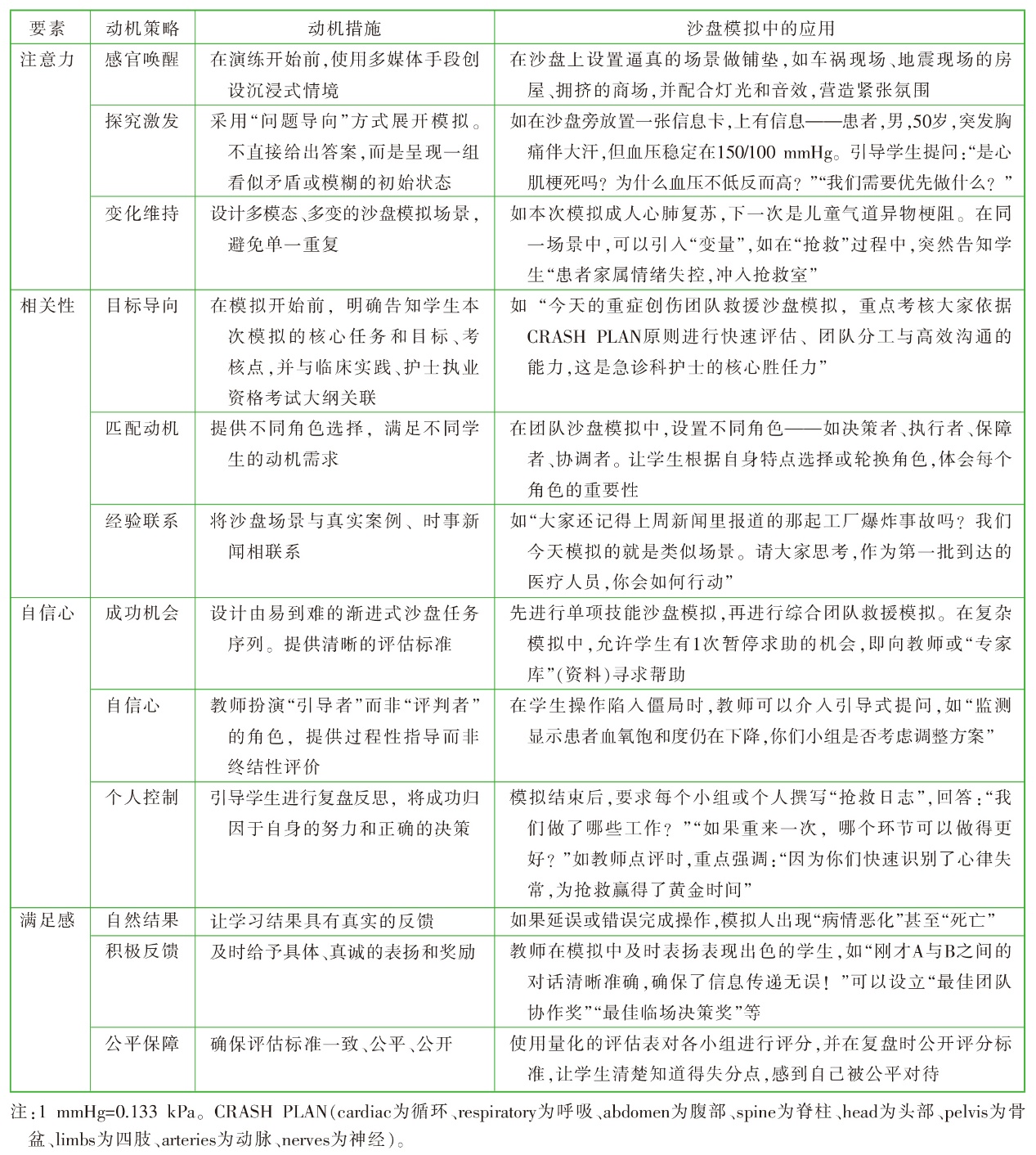
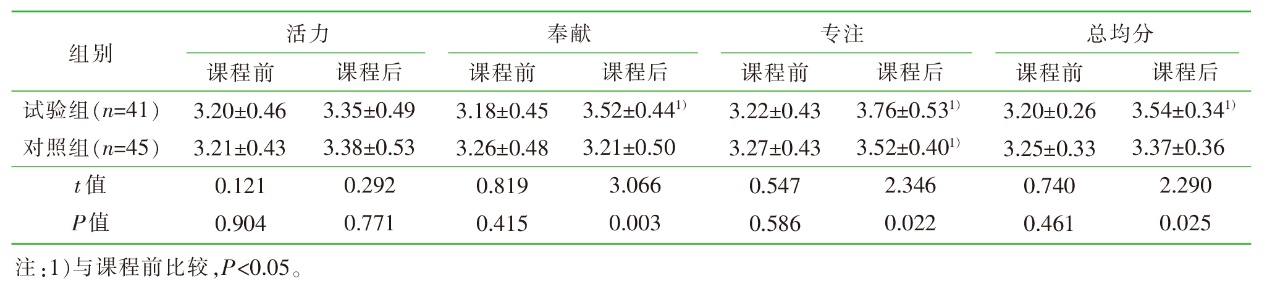
目的 探讨基于ARCS(Attention为注意、Relevance为关联、Confidence为信心、Satisfaction为满意)动机模型的沙盘模拟在急危重症护理学课程中的应用效果。方法 通过挖掘学习问题、明确教学重点及其主要实现路径,确定核心动机措施并规划其在沙盘模拟中的应用,设计实验教学内容与基于ARCS动机模型的沙盘模拟的融合策略,展开教学设计。便利选取某校86名护理本科生作为教学对象,以班级为单位,将其按抽签的方式分为试验组(n=41)与对照组(n=45)。在特定实验教学内容下,试验组接受基于ARCS动机模型的沙盘模拟教学,对照组接受常规教学。比较两组学习投入度、理论与实操考核成绩及对课程的满意度,并通过对试验组11名学生的半结构化访谈了解其在基于ARCS动机模型的沙盘模拟中的收获。结果 试验组学习投入度条目均分、理论考核与课程成绩、对课程的满意度条目均分均高于对照组(P<0.05)。经访谈资料分析,提炼出四大主题:借助模拟真实临床环境实现理论与实践的融合、促进知识转化、提升临床技能熟练度及培养积极的患者护理态度。结论 基于ARCS动机模型的沙盘模拟有助于提升护理本科生的学习投入度、急危重症护理能力,学生对其认可度较高。

关键词: 注意-关联-信心-满意动机模型, 沙盘模拟, 急危重症护理学, 实验教学, 本科

Abstract:

Objective To explore the application effect of sand table simulation based on the Attention-Relevance-Confidence-Satisfaction(ARCS) motivation model in the Emergency and Critical Care Nursing course. Methods The teaching design was conducted through three steps:identifying learning problems,clarifying teaching priorities and their core implementation paths;determining key motivational interventions and planning their application in sand table simulation;and designing the integration strategy of teaching content and sand table simulation based on the ARCS motivation model. By convenience sampling,86 nursing undergraduates from a university were enrolled as the participants. They were divided into an experimental group(n=41) and a control group(n=45) by lot drawing according to their classes. For specific experimental teaching content,the experimental group received sand table simulation teaching based on the ARCS motivation model,while the control group received conventional teaching methods. The two groups were compared in terms of learning engagement,theoretical and practical assessment scores,and course satisfaction. In addition,semi-structured interviews were conducted with 11 students from the experimental group to explore their gains from the sand table simulation based on the ARCS motivation model. Results Compared with the control group,the experimental group had significantly higher scores in the average item score of learning engagement,theoretical assessment results,course grades,and average item score of course satisfaction(all P<0.05). Analysis of interview data extracted four major themes:integrating theory with practice by simulating real clinical environments,facilitating knowledge transformation,improving the proficiency of clinical skills,and cultivating a positive attitude towards patient care. Conclusion Sand table simulation based on the ARCS motivation model is conducive to improving nursing undergraduates’ learning engagement and emergency and critical care nursing competence,and it is highly recognized by students.

Key words: Attention-Relevance-Confidence-Satisfaction Motivation Model, Sand Table Simulation, Emergency and Critical Care Nursing, Experimental Teaching, Undergraduate