ISSN 2097-6054(网络) ISSN 1672-9234(印刷) CN 11-5289/R
主管:中国科学技术协会 主办:中华护理学会
出版:中华护理杂志社
收录:中国科学引文数据库(CSCD)来源期刊
   中国期刊全文数据库
   中国核心期刊(遴选)数据库
   Scopus

中华护理教育 ›› 2026, Vol. 23 ›› Issue (6): 689-696.doi: 10.3761/j.issn.1672-9234.2026.06.008

• 人工智能赋能护理教育专题 • 上一篇    下一篇

护理专业学生对课程中人工智能技术的接受度-应用行为差距及成因分析

靳文韬(), 赵娟娟, 曹希, 白杨, 程丽, 郑晶, 李琨*()   

  1. 中山大学护理学院 广州市 510080
  • 收稿日期:2025-12-12 出版日期:2026-06-15 发布日期:2026-06-18
  • 通讯作者: *李琨,E-mail:likun22@mail.sysu.edu.cn
  • 作者简介:靳文韬:女,本科(硕士在读),E-mail:jinwt5@mail.sysu.edu.cn
    第一联系人:

    研究构思与设计、论文修改和审校为李琨、赵娟娟、曹希、白杨、程丽、郑晶,数据收集与处理为靳文韬,论文撰写为靳文韬、李琨。

  • 基金资助:
    中山大学校级教学质量工程高等教育教学改革研究与实践重点项目:护理学专业课程GenAI应用场景的师生双视角技术接受度分析与课程优化建设研究

Analysis of the gap between nursing students’ acceptance and use behavior of artificial intelligence technology in courses and its causes

JIN Wentao(), ZHAO Juanjuan, CAO Xi, BAI Yang, CHENG Li, ZHENG Jing, LI Kun*()   

  1. School of NursingSun Yat-Sen UniversityGuangzhou 510080, China
  • Received:2025-12-12 Online:2026-06-15 Published:2026-06-18
  • Contact: *LI Kun,E-mail:likun22@mail.sysu.edu.cn
  • Supported by:
    Key Project of Higher Education Teaching Reform Research and Practice under the Sun Yat-sen University Teaching Quality Engineering Program:a teacher-student dual-perspective study on technology acceptance of generative AI application scenarios in nursing courses and curriculum optimization

摘要:

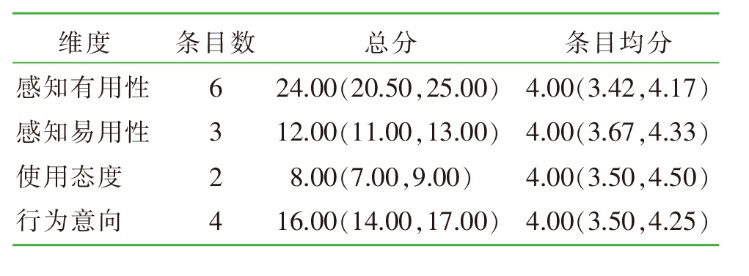
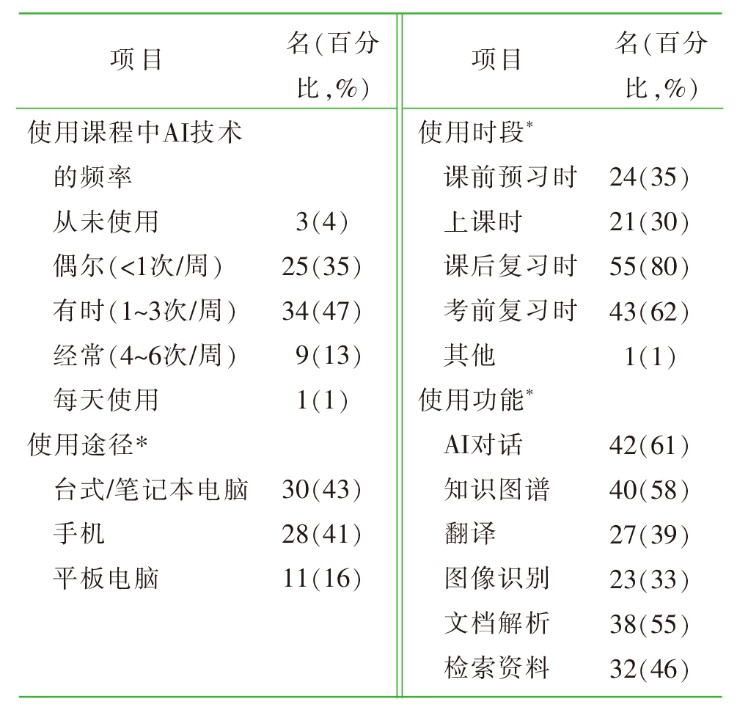
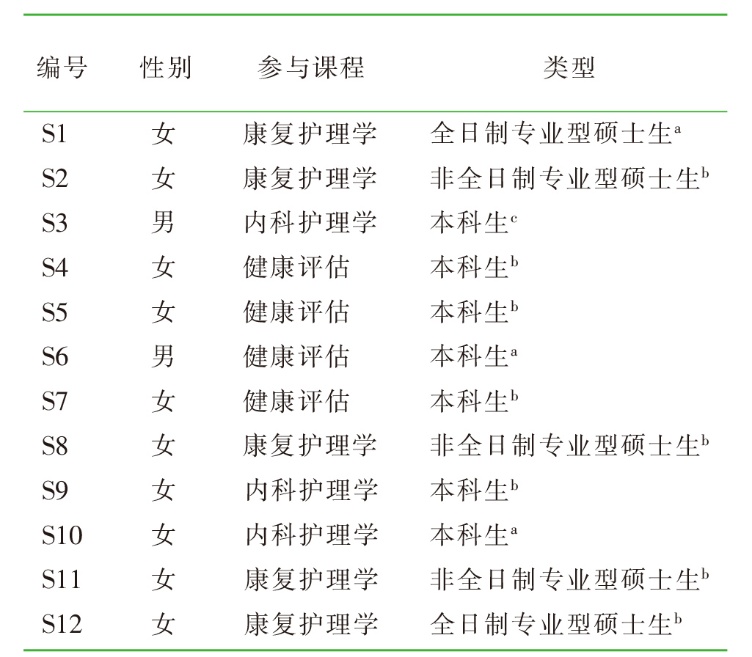
目的 探究护理专业学生对课程中人工智能(artificial intelligence,AI)技术的接受度与应用行为间的差距,以及其成因。方法 采用解释性序列混合研究设计。2025年6月便利抽取广东省某本科高校参与3门护理学“AI+课程”学习的学生(n=72)作为调查对象,采取自设技术接受度问卷及应用行为调查表对其进行调查。于2025年7月—8月,对目的选取的12名学生,以及5名课程负责人和主讲教师进行半结构化访谈,按照主题分析法对访谈资料进行分析。结果 量性研究结果显示,72名学生对课程中AI技术的接受度(问卷条目均分的中位数为3.93分)为中等偏上(与问卷条目得分范围的中间值3分相比),但实际应用频率低[仅14%表示经常(4~6次/周)或每天使用],即呈现出认知-行为差距。质性研究结果显示,造成这一差距的原因包括平台功能与学习需求错位、学生使用动机不足、AI素养不足及传统学习惯性等。结论 护理专业学生对课程中AI技术的接受度与应用行为之间存在差距,需通过按需优化功能、增强使用动机、开展AI素养培养及教学有机融合AI等措施缩小差距,从而推动护理学“AI+课程”的建设及应用。

关键词: 教育, 护理, 人工智能+课程, 技术接受度, 技术应用行为, 混合研究

Abstract:

Objective To explore the gap between nursing students’ acceptance of artificial intelligence(AI) technology in courses and their actual use behavior,as well as the underlying causes. Methods An explanatory sequential mixed-methods design was adopted. In June 2025,a convenience sample of 72 nursing students was recruited from three nursing AI-enhanced courses. A self-designed questionnaire on technology acceptance and a use behavior survey were used for data collection. From July to August 2025,purposive sampling was employed to select 12 students and 5 teachers for semi-structured interviews,and interview data were analyzed using thematic analysis. Results Quantitative results showed that among the 72 students,the acceptance of AI technology in the courses was moderately high(median of the mean item score of the questionnaire was 3.93 points),compared with the midpoint score of 3 on the scale. However,the frequency of actual use was low,with only 14% of students reporting using AI frequently(4-6 times per week) or daily,indicating a cognition-behavior gap. Qualitative findings suggested that this gap was attributed to a mismatch between platform functions and learning needs,insufficient motivation to use AI,limited AI literacy,and inertia in traditional learning habits. Conclusion There is a gap between nursing students’ technology acceptance of AI-enhanced courses and their actual use behavior. Targeted measures,including demand-oriented function optimization,strengthening use motivation,providing AI literacy training,and organically integrating AI into teaching,are needed to narrow this gap and promote the development and application of nursing AI-enhanced courses.

Key words: Education, Nursing, AI-Enhanced Courses, Technology Acceptance, Technology Use Behavior, Mixed-Methods Research